How to Calculate EDD – Find Your Baby’s Expected Delivery Date
Understanding how to calculate EDD is essential for planners, policymakers, local governments, NGOs, and practitioners who design and evaluate economic development initiatives. “EDD” is an acronym used in multiple contexts — most notably for Economic Development Districts/Departments (regionally focused planning and funding entities) and, in a very different field, for Estimated Due Date in obstetrics. This article focuses on the public-policy meaning — Economic Development Districts and associated calculations — while briefly distinguishing the alternate medical usage to avoid confusion. We’ll cover history, objectives, core calculation methods, implementation at state and regional levels, success stories, persistent challenges, comparisons with other schemes, and future prospects. The aim is to give you a thorough, authoritative, and practical resource you can use immediately.
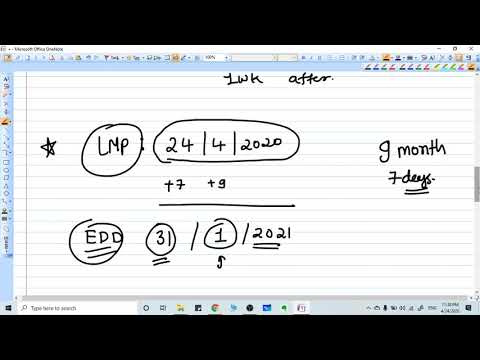
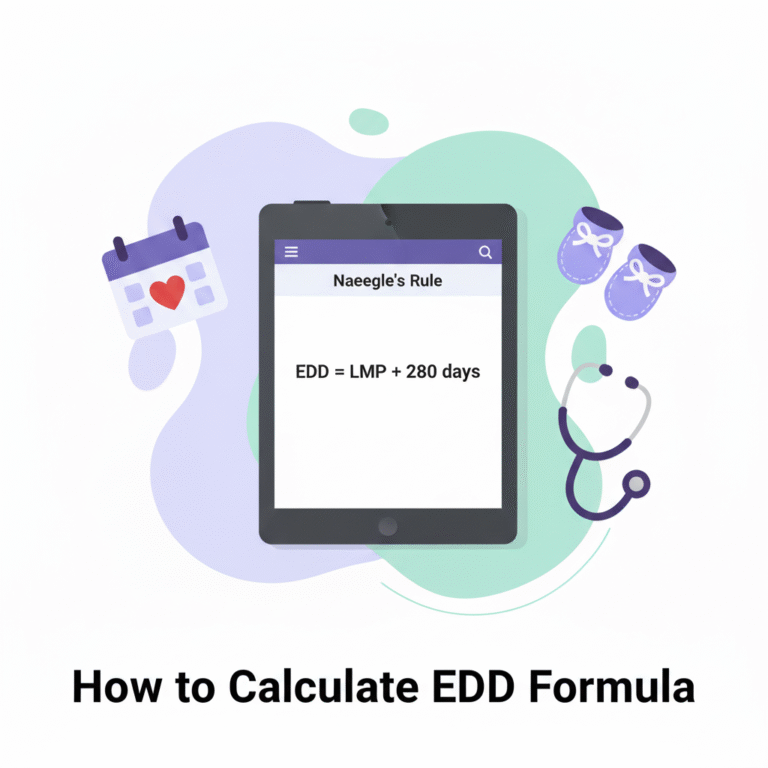
Note: If you meant “Estimated Due Date” (pregnancy), clinical guidance and Naegele’s Rule explain how to calculate it (add 280 days to the first day of the last menstrual period or use first-trimester ultrasound for greater accuracy). For public-policy and regional development practitioners, the sections below explain how to calculate EDD-related funding, performance metrics, and economic impact.
Introduction: What “EDD” means in public policy
In public administration, EDD commonly stands for Economic Development District (also written as Economic Development Department in some jurisdictions). EDDs are multi-jurisdictional planning entities that coordinate regional economic strategies, prepare Comprehensive Economic Development Strategies (CEDS), and often act as intermediaries between federal/state programs and local governments. In the United States, EDDs are recognized by the Economic Development Administration (EDA) and help design long-term, regionally coordinated plans. U.S. Economic Development Administration
Because EDDs play both planning and delivery roles — from strategy-setting to administering grants, workforce programs, and infrastructure projects — understanding how to calculate EDD outcomes, funding shares, and value-for-money metrics is crucial for evidence-based governance.
History and evolution of Economic Development Districts
The modern EDD concept grew from mid-20th-century regional planning initiatives. Governments recognized that economic development seldom respects municipal borders: labor markets, transportation networks, watersheds, and industry clusters cross local lines. To create economies of scale in planning and investment, policy-makers promoted multi-jurisdictional districts that could coordinate strategy and aggregate resources.
In the U.S., the EDA formalized the concept, supporting regions to form EDDs and produce CEDS documents that outline regional assets, priorities, projects, and performance indicators. Over time, EDDs have evolved beyond planning into active program administration — applying for federal grants, managing revolving loan funds, helping small businesses access finance, and coordinating workforce development. U.S. Economic Development Administration+1
Internationally, similar concepts exist under different names (regional development agencies, local enterprise partnerships, development corporations), but the central idea is the same: coordinate, prioritize, and implement across jurisdictions.
Objectives of EDDs: why we calculate and measure them
Before diving into formulas and measurements, it’s important to be clear on why we calculate EDDs — meaning why we quantify their funding needs, allocation formulas, and impact:
- Fair and transparent allocation of funds — to distribute limited public resources across counties, municipalities, or sectors using objective criteria.
- Performance measurement — to determine whether interventions increase jobs, incomes, or private investment.
- Priority-setting — to compare candidate projects (transport, training centers, business incubators) and select those with the highest returns or equity benefits.
- Compliance and reporting — donors and central agencies often require standard metrics (jobs created, funds leveraged, households served).
- Strategic learning — a consistent calculation framework enables longitudinal evaluation and evidence-based policy refinement.
These objectives shape the methods we use when we ask how to calculate EDD — from simple per-capita formulas to advanced cost-benefit models.
Core concepts and metrics used in EDD calculations
When learning how to calculate EDD, you must master several core metrics. They’re the building blocks for allocations, impact statements, and cost-effectiveness analyses.
- Base Population (P) — population of the EDD service area. Commonly the denominator for per-capita allocations.
- Labor Force (LF) — size and composition of the local workforce; used for workforce program weighting.
- Unemployment Rate (U) — to target areas of acute need.
- Poverty Rate (PR) — for equity adjustments.
- Gross Regional Product (GRP) or GDP proxy — to measure economic scale.
- Jobs Created/Retained (J) — direct employment impacts attributable to an intervention.
- Private Investment Leveraged (I) — private dollars mobilized per public dollar.
- Benefit–Cost Ratio (BCR) — present value of benefits divided by costs.
- Multiplier (M) — fiscal or employment multiplier capturing indirect and induced effects.
These elements appear in allocation formulas, in ROI and BCR calculations, and in performance dashboards.
How to calculate funding for an EDD: allocation formulas
One of the most common uses of the phrase how to calculate EDD in practice is to determine how much funding an Economic Development District or region should receive. Below are widely used approaches, from simple to sophisticated.
1. Per-capita allocation (baseline)
A straightforward starting point:
Allocation = Total Program Budget × (Population of EDD / Total Program Population)
This treats every resident equally. It’s transparent but ignores need or economic performance.
2. Needs-weighted allocation
To reflect higher need in some areas:
Allocation = Total Program Budget × [(α × (P_region / P_total)) + (β × (U_region / U_total)) + (γ × (PR_region / PR_total))]
Where α, β, γ are weights that sum to 1. You can adjust the weights according to policy priorities (e.g., set β higher if reducing unemployment is the main goal). Needs-weighting helps prioritize distressed counties.
3. Performance-based allocation
Rewarding regions that can deliver:
Allocation = Base allocation (per-capita or needs-weighted) + Performance Bonus
Performance Bonus might be proportional to prior-year jobs created, private investment leveraged, or successful graduation rates from workforce programs.
4. Hybrid allocation with floor and ceiling
Often used to prevent destabilizing swings:
Allocation = max(MIN_SHARE, min(MAX_SHARE, Calculated_Allocation))
Where MIN_SHARE and MAX_SHARE prevent any area from losing all funding or absorbing too large a share in a single cycle.
5. Project-specific competitive calculation
Many EDD grants use a project-level scoring matrix that converts technical criteria into numeric scores. Example criteria and weights:
- Economic impact (30%)
- Jobs created per $1,000,000 (20%)
- Equity and inclusion benefits (15%)
- Environmental sustainability (10%)
- Readiness and co-financing (15%)
- Regional strategic fit (10%)
Projects with the highest weighted scores receive funding. The scoring system itself is a practical instance of how to calculate EDD at the project level.
Calculating economic impact and returns: from jobs to multipliers
Determining the economic return on EDD investments is central for accountability and scaling. Common steps and formulas include:
Estimating direct jobs (J_direct)
Direct jobs are those created by the funded project or firm:
J_direct = number of full-time-equivalent (FTE) positions created
Standardize to FTEs (e.g., two part-time roles = 1 FTE).
Estimating indirect and induced jobs via multipliers
Use regional input-output multipliers (available from national statistics agencies or IMPLAN/SAM-type models):
J_total = J_direct × Multiplier_employment
Multipliers capture supply-chain (indirect) and household-spending (induced) effects.
Calculating private investment leveraged (I_leveraged)
This shows how much private capital the project attracted per dollar of public support:
I_leveraged = Private_investment / Public_investment
A leverage ratio of 3:1 means $3 private for each public $1.
Cost per job created (CPJ)
A common metric:
CPJ = Public_investment / J_direct
Lower CPJ indicates higher efficiency, but must be read against job quality and wages.
Benefit–Cost Ratio (BCR)
Discount future benefits to present value (PV) and compare to PV of costs:
BCR = PV(Benefits) / PV(Costs)
Benefits can include increased earnings, tax revenue, and avoided costs (e.g., unemployment benefits not paid). A BCR > 1 suggests positive net benefits.
Internal Rate of Return (IRR)
For investment-grade analysis, estimate IRR on public funds across projected cashflows (tax receipts, fees, cost savings).
Social Return on Investment (SROI)
Incorporate social and environmental outcomes (improved health, reduced crime) into an SROI framework. This requires monetizing nonmarket benefits — a complex but increasingly common practice.
Data sources and tools for robust calculations
Accurate calculations require reliable data and modeling tools:
- Census and national statistics — population, labor force, GRP.
- Regional economic models — IMPLAN, REMI, or national input-output tables.
- Administrative data — business registrations, tax receipts, unemployment claims (often available from Employment Development Departments or state labor agencies). For example, the California EDD provides calculators and guidance for unemployment insurance, disability insurance, and PFL estimates. Employment Development Department+1
- Surveys and beneficiary data — for program-level metrics (trainee outcomes, business survival rates).
- GIS and spatial datasets — to map service areas and accessibility.
Where national-level models are unavailable, practitioners sometimes use conservative multipliers drawn from literature and local validation studies.
Implementation: putting EDD calculations into practice
Calculations are only useful if incorporated into routine planning and decision-making. Practical steps for EDD implementation:
- Define objectives clearly. Are you prioritizing jobs, equity, climate resilience, or private investment leverage?
- Select indicators. Pick a small set (5–8) of high-value metrics: jobs, leverage ratio, BCR, per-capita investment, access to services, female-headed households reached, and poverty reduction.
- Choose allocation rules. Publish transparent formulas (per-capita, needs-weighted, performance bonuses).
- Standardize reporting. Use common definitions (FTE, leverage) across projects and years.
- Build dashboards. Provide policymakers with interactive dashboards showing allocations, results, and simulators for alternative weightings.
- Audit and validation. Periodically audit claims (e.g., verify reported jobs via payroll records).
- Feedback loops. Use evaluation results to tweak weights, floors, and eligibility.
These steps make how to calculate EDD a repeatable, defensible, and policy-relevant activity.
State-level impact and variation
EDD implementation varies significantly across states and countries. Different states emphasize different priorities — some favor workforce and skills; others prioritize infrastructure or small-business finance.
- Example — U.S. states: States with active EDD-like institutions (and supportive state plans) often align EDA funding with state economic development strategies. For instance, some state EDD offices produce state plans that coordinate EDA funds with local economic development organizations. These state plans outline methodologies for prioritization and allocation. edd.newmexico.gov
- Regional disparities: More developed regions typically demonstrate higher private leverage ratios and lower CPJ but may score lower on equity indices. Conversely, distressed regions can have higher needs but lower capacity to match funds, necessitating floor allocations and technical-assistance components.
- Programmatic differences: State Employment Development Departments (also abbreviated EDD in places like California) administer unemployment insurance, disability, and paid family leave — their calculators and contribution rules matter when assessing local labor market resilience and program demand. Awareness of how these social protections function affects EDD planning because workforce programs interact with unemployment and SDI benefits. Employment Development Department+1
Because of this heterogeneity, practitioners should always specify the jurisdiction and program when asking how to calculate EDD for a particular funding stream.
Success stories: what effective EDD calculations and investments look like
Examined at a high level, the best EDD cases show three common traits: strong data, clear rules, and capacity-building support. Selected examples:
- Leveraging private investment through clear scoring: Regions that use a transparent scoring matrix to select infrastructure projects often see higher co-financing rates. When eligibility rules reward projects with committed private partners, project sponsors marshal financing faster.
- Targeting through need-weighted formulas: Some multi-county EDDs introduced poverty- and unemployment-weighted allocations, which led to larger flows to legacy-industrial or rural counties. This targeting produced measurable poverty declines when combined with workforce interventions and small-business support.
- Capacity-building as multiplier: EDDs that allocate a portion of funds to technical assistance and predevelopment (feasibility, permitting) reduce project failure rates and increase the leverage ratio.
Notable documented exemplars in the U.S. include well-managed Economic Development Districts that combine CEDS-driven prioritization with transparent scoring; national resources and EDA-supported maps and databases help identify and scale such success stories. NADO+1
Challenges in calculating and using EDD metrics
Despite the utility of quantitative calculations, several practical and conceptual problems persist:
- Data quality and timeliness. Lagged statistics and incomplete administrative datasets complicate real-time allocation.
- Attribution. Distinguishing project-attributable jobs from broader economic trends is difficult; many jobs reported as “created” may have occurred anyway.
- Perverse incentives. If funding depends on reported jobs, recipients may over-count or favor short-term hires over sustainable employment.
- Equity trade-offs. Performance-based allocations risk favoring already well-performing regions unless floors and weights adjust for need.
- Multipliers and model sensitivity. Small changes in multipliers can dramatically alter estimated returns; region-specific validation is needed.
- Political pressures. Allocation decisions are often politically sensitive; transparent formulas help but don’t fully eliminate lobbying pressures.
- Cross-jurisdictional spillovers. Projects in one county might benefit adjacent areas, complicating allocation fairness.
Good practice recognizes these challenges and embeds validation, audits, and safeguards into the EDD calculation and funding cycle.
Comparisons with other schemes and agencies
Understanding how to calculate EDD is easier when contrasted with other funding models and agencies.
- Versus per-project discretionary grants: EDD allocation formulas tend to emphasize regional balance and program continuity. Discretionary grants (one-off competitive awards) prioritize excellence and novelty. Each has value; many systems combine both.
- Versus social-protection programs: Programs like unemployment insurance (administered by Employment Development Departments in some states) target income stabilization. EDD-funded programs aim to change structural conditions (skills, investment, infrastructure). Coordination matters: workforce EDD investments should align with UI and retraining systems to maximize employability and minimize duplication.
- Versus private-sector financing: Private lenders focus on creditworthiness and ROI. EDD public funds tolerate longer payback horizons and prioritize externalities (equity, resilience).
Learning from these comparisons helps design hybrid instruments — e.g., repayable grants (soft loans) that blend public patience with private discipline.
Methodological notes: improving accuracy in EDD calculations
To improve the credibility of EDD calculations, adopt the following methodological standards:
- Use standardized definitions. Define FTE, leverage, and attributable outcomes consistently.
- Base multipliers on local studies. National average multipliers are a stop-gap; local IMPLAN-type models are better.
- Discount rates and time horizons. Use plausible discount rates for BCR and IRR. For infrastructure, consider 20–30-year horizons.
- Counterfactual analysis. Estimate what would have happened without the project to improve attribution.
- Sensitivity analysis. Test how results change under alternative multipliers, discount rates, and job retention assumptions.
- Independent validation. Use third-party evaluators periodically to audit claims.
These practices make answers to how to calculate EDD more robust and defensible.
Future prospects: trends shaping EDD calculations and delivery
Several trends will influence how practitioners approach how to calculate EDD in the coming years:
- Data modernization. Better administrative linkages, payroll data access, and real-time dashboards will shorten feedback loops.
- Focus on equity and climate. New weighting schemes will embed carbon metrics and inclusive-growth indicators into allocation formulas.
- Outcome contracting and pay-for-performance. Social impact bonds and payment-by-results models will require precise measurement of attributable outcomes.
- Geospatial targeting. Advanced GIS analytics will allow micro-targeting of interventions to neighborhoods rather than entire counties.
- Regional collaboration and cross-state EDDs. Increasingly, EDDs will transcend single-state borders to manage commuter sheds and supply chains, requiring harmonized calculation rules. NADO
Practical example: step-by-step calculation for a hypothetical region
To make the abstract concrete, here is a worked example demonstrating how to calculate EDD allocations and impact.
Scenario
A national EDD program has $10 million for region-level grants. Your multi-county EDD has:
- Population: 500,000 (out of total program population 50,000,000)
- Unemployment rate: 9% (program average 6%)
- Poverty rate: 18% (program average 12%)
Set weights: α = 0.5 (population), β = 0.3 (unemployment), γ = 0.2 (poverty).
Step 1: Normalized shares
- Population share = 500,000 / 50,000,000 = 0.01
- Unemployment share = 9 / 6 = 1.5 (normalize to share: need to compute region’s share of cumulative unemployment across all regions; for simplicity, assume normalized unemployment share = 0.015)
- Poverty share = 18 / 12 = 1.5 (normalized poverty share = 0.015)
Step 2: Weighted formula
Allocation share = α×0.01 + β×0.015 + γ×0.015
= 0.5×0.01 + 0.3×0.015 + 0.2×0.015
= 0.005 + 0.0045 + 0.003 = 0.0125
Allocation = $10,000,000 × 0.0125 = $125,000
Step 3: Performance bonus
Assume a performance fund of $1,000,000 with bonus proportional to previous-year jobs created. If your EDD created 250 jobs and total jobs across regions were 50,000:
Bonus share = 250 / 50,000 = 0.005 → Bonus = $1,000,000 × 0.005 = $5,000
Total allocation = $130,000
Step 4: Impact estimates
If the funded project commits $500,000 public and $1,500,000 private:
- Leverage ratio = 1,500,000 / 500,000 = 3:1
If project reports 25 direct FTEs: - CPJ = Public_investment / J_direct = 500,000 / 25 = $20,000 per job
Assuming an employment multiplier of 1.8: - J_total = 25 × 1.8 = 45 total jobs (direct + indirect)
This simple example shows how allocation and impact calculations interact in practical decision-making.
Integrating women’s empowerment, rural development, and social welfare into EDD calculations
Your earlier brief included LSI keywords like women empowerment schemes, rural development, and social welfare initiatives. Good EDD calculation frameworks explicitly incorporate social goals:
- Gender-weighted scoring. Award extra points to projects that demonstrate female entrepreneurship, women’s employment shares, or services targeted to female-headed households.
- Rural add-ons. Apply a rural multiplier or floor to ensure sparsely populated areas receive adequate per-area investment.
- Social welfare alignment. Include metrics such as reduction in households below a living-wage threshold or improved access to basic services per capita.
For example, a project that creates 20 jobs but 80% are for women and 60% for low-income residents may receive a higher composite score under an equity-adjusted BCR.
Practical tools and templates (quick reference)
When operationalizing how to calculate EDD, consider these tool categories:
- Allocation spreadsheet templates. Pre-built formulas for population-weighted and needs-weighted calculations.
- Project scoring matrix templates. Weighted criteria with automated scoring.
- ROI/BCR calculators. Present-value calculators with adjustable discount rates.
- Job multiplier lookup tables. Region-specific multipliers sourced from national statistics agencies.
- Dashboard software. GIS-enabled dashboards for visual allocation and impact tracking.
Many state EDD offices and national agencies publish templates and calculators; for instance, California’s Employment Development Department provides calculators and manuals for related labor-market benefits, which can be instructive when aligning workforce initiatives with EDD planning. Employment Development Department+1
Governance and transparency: making calculations credible
Credibility matters. To build trust:
- Publish the formula. Make allocation and scoring formulas public and easily explained.
- Document data sources. Link each metric to a specific dataset and release periodic updates.
- Independent review. Commission periodic third-party evaluations.
- Stakeholder participation. Invite municipalities, civil society, and private-sector partners into CEDS processes.
- Appeals and adjustments. Allow counties to appeal allocations with documented evidence.
These practices reduce perceptions of arbitrariness and help refine the technical choices embedded in how to calculate EDD.
FAQs
What follows are common questions practitioners ask about how to calculate EDD.
What is the simplest way to calculate how much funding an EDD should receive?
The simplest method is a per-capita allocation: multiply the program’s total budget by the region’s population share. It’s transparent but does not account for need or performance.
How do I account for high-need areas when calculating EDD allocations?
Use a needs-weighted formula that assigns weights to population, unemployment rate, and poverty rate (or other indicators). Set weights to reflect policy priorities and include floors to prevent extreme fluctuations.
How do I measure jobs “created” reliably?
Standardize on FTEs and verify with payroll or tax records where possible. Use counterfactual estimates and independent audits to strengthen attribution.
What multipliers should I use for indirect jobs?
Local input-output models (IMPLAN/REMI) provide the most accurate multipliers. If unavailable, use conservative literature-based multipliers and run sensitivity analyses.
How can EDD calculations support women’s empowerment and rural development?
Embed gender and rurality weights in allocation formulas or award bonus points to projects that prioritize female employment, women-owned firms, and services reaching remote populations.
How do EDD calculations differ from the medical use of EDD?
In medicine, EDD means Estimated Due Date for pregnancy and is calculated using Naegele’s Rule (add 280 days to the first day of the last menstrual period) or by first-trimester ultrasound. In public policy, EDD is an Economic Development District; the calculations are about allocations, impact, and returns. For pregnancy guidance, consult clinical sources. stanfordchildrens.org+1
Where can I find authoritative templates and guidance?
National agencies, state EDD offices, and the Economic Development Administration provide model CEDS templates, calculators, and maps. Consult your country’s national economic development agency for local resources. NADO+1
Conclusion: a practical checklist for practitioners
If you took away just one thing about how to calculate EDD, make it this: use transparent, data-driven formulas aligned with clear objectives, and pair them with robust monitoring and independent validation.
Quick checklist:
- Define policy objectives (jobs, equity, resilience).
- Choose a small, focused set of indicators.
- Publish your allocation formula and scoring matrix.
- Use local data and validated multipliers.
- Build in floors/ceilings and equity adjustments.
- Audit, evaluate, and iterate.
Understanding how to calculate EDD well will make your regional strategies more equitable, efficient, and evidence-driven — and that’s the essence of modern economic development practice.
Selected references and resources
- Economic Development Districts (EDA overview). U.S. Economic Development Administration
- Interactive EDD map and CEDS resources (NADO Research Foundation). NADO
- California Employment Development Department calculators and guidance (UI, DI, PFL). Employment Development Department+1
- Methods for estimating due date (ACOG guidance — for medical EDD). ACOG
- Naegele’s Rule and pregnancy due date calculators (Stanford/Johns Hopkins patient resources). stanfordchildrens.org+1