
How to Calculate EDD in Pregnancy – Estimate Your Baby’s Due Date
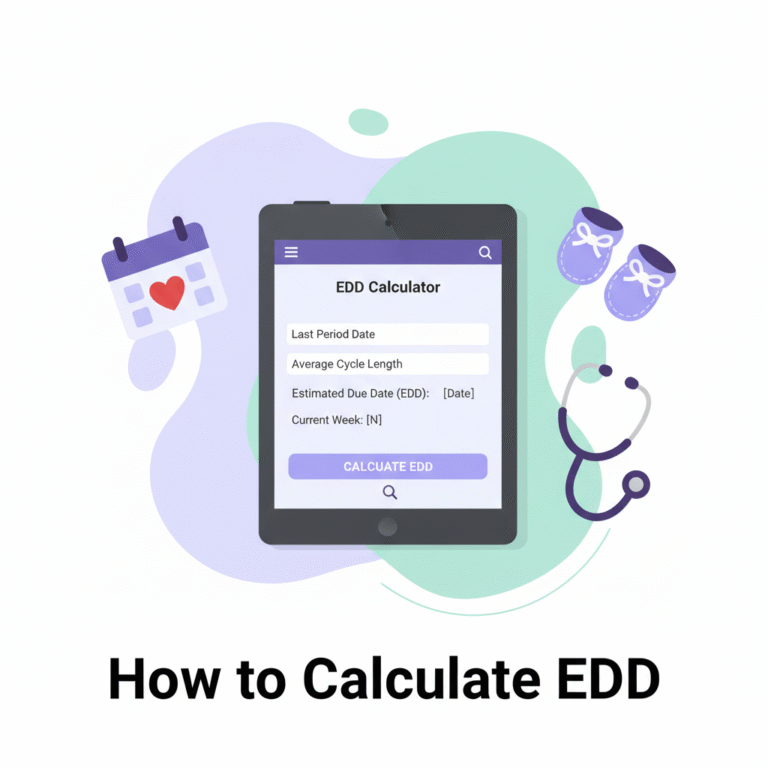
nderstanding how to calculate EDD in pregnancy is essential for expectant parents, healthcare providers, and public-health planners. The estimated due date (EDD) is more than a calendar marker: it influences prenatal care schedules, screening timing, resource allocation, and emotional preparation. This long-form article explains, step by step, how to calculate EDD in pregnancy, explores its history, objectives, methods, regional and state-level impacts, success stories, operational challenges, comparisons with alternative approaches, and future prospects for improving accuracy and access. Throughout, the key phrase how to calculate EDD in pregnancy appears naturally and helpfully to guide readers and optimize discoverability.
What is EDD and why does it matter?
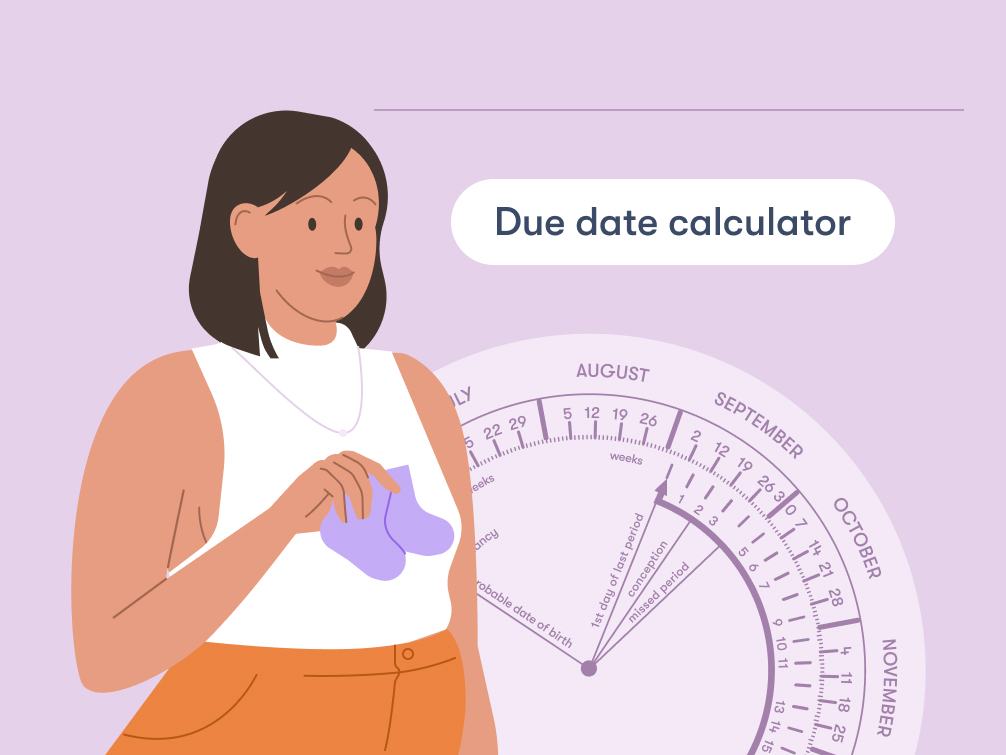
The estimated due date (EDD) is the best medical estimate of when labor will begin and the baby will be born. Knowing how to calculate EDD in pregnancy helps schedule critical prenatal screenings (e.g., first-trimester screening, anatomy ultrasound, gestational diabetes testing), plan interventions for high-risk pregnancies, and coordinate hospital and community resources. For families, the EDD provides a horizon for planning maternity leave, childcare, travel, and mental preparation.
A short history: how EDD calculation evolved
Historically, clinicians relied on maternal recall of the last menstrual period (LMP) and basic clinical exam to estimate delivery. Over time, standardized rules emerged to make this estimate reproducible: the most widely used is Naegele’s Rule, an algorithmic approach taught in medical schools for decades. With the advent of ultrasound, particularly first-trimester crown-rump length measurements, and later technologies like biochemical markers and statistical gestational-age models, methods to compute the EDD have become increasingly accurate. This historical arc shows why it remains useful to know how to calculate EDD in pregnancy using several complementary tools.
Objectives of EDD calculation
- Provide a target date for scheduling prenatal care and screening.
- Identify deviations from expected fetal growth or timing (preterm or post-term).
- Guide clinical decisions in labor induction, corticosteroid timing, and neonatal preparedness.
- Support public-health metrics—birth-rate projections, perinatal outcome tracking, and resource planning.
Understanding how to calculate EDD in pregnancy meets both clinical and operational goals, informing individualized patient care and broader maternal-child health strategies.
Basic methods: LMP, Naegele’s Rule, and clinical exam
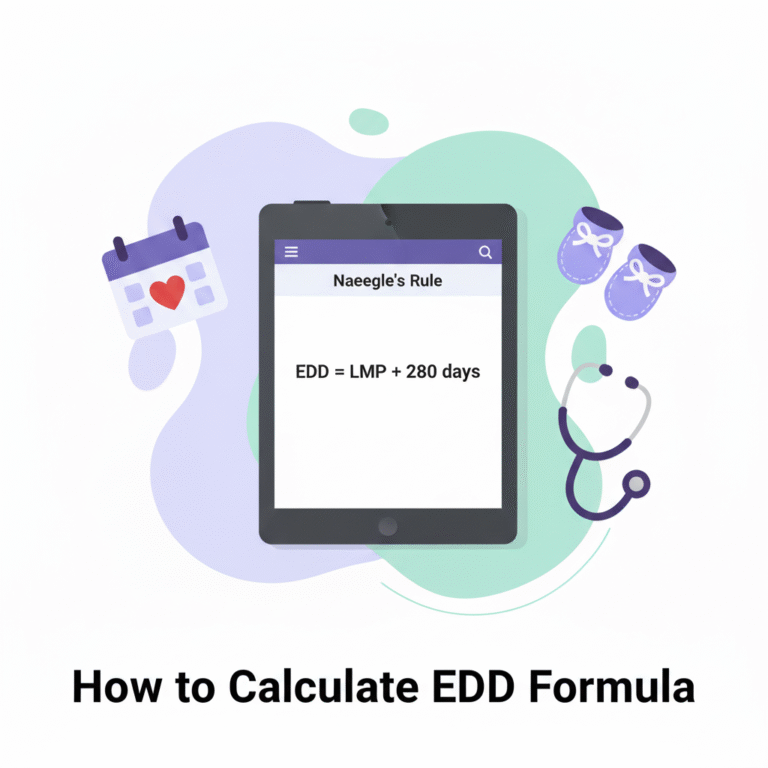
The simplest and most commonly taught method is based on the first day of the last menstrual period (LMP). Naegele’s Rule adjusts the LMP to generate the EDD:
- Start with the first day of the LMP.
- Add one year.
- Subtract three months.
- Add seven days.
For example, if LMP is January 10, 2025:
- Add one year → January 10, 2026.
- Subtract three months → October 10, 2025.
- Add seven days → October 17, 2025.
This yields a calculated EDD. Learning how to calculate EDD in pregnancy with Naegele’s Rule is simple and fast for clinic settings, but it assumes a regular 28-day menstrual cycle and ovulation on day 14.
Clinical exam methods include uterine height measurements and assessments of fetal position, but these are less precise early in pregnancy. They are useful adjuncts when LMP is unknown.
Ultrasound-based methods: the modern standard
Ultrasound offers greater accuracy, especially when performed early. Understanding how to calculate EDD in pregnancy now commonly means integrating ultrasound findings, particularly:
- First-trimester crown-rump length (CRL): the single most accurate ultrasound metric for dating pregnancy during the first trimester (up to ~13+6 weeks).
- Second-trimester biometric averages: biparietal diameter (BPD), head circumference (HC), femur length (FL), and abdominal circumference (AC). These provide dating estimates when first-trimester data are unavailable, though with slightly wider margins of error.
Many obstetrical guidelines recommend prioritizing first-trimester ultrasound dating for accuracy and for adjusting LMP-based EDD when discrepancies exceed defined thresholds (e.g., more than 7 days difference in the first trimester).
Knowing how to calculate EDD in pregnancy using ultrasound is essential for clinicians and patients seeking the most precise estimate.
Step-by-step: clinical workflow to calculate EDD
Below is a practical sequence clinicians and informed patients can follow to calculate EDD:
- Gather history: obtain the first day of the LMP, menstrual cycle length, and contraceptive or assisted reproductive technology (ART) use.
- Apply Naegele’s Rule for a preliminary EDD if LMP is known and cycles are regular.
- Order first-trimester ultrasound (if available): measure crown-rump length and calculate ultrasound-based EDD.
- Reconcile dates: if the ultrasound EDD differs by more than guideline thresholds from LMP-based EDD, adjust the official EDD to the ultrasound date.
- Document the chosen EDD and the reasoning in the prenatal record.
- Reassess if further data emerge (e.g., IVF known fertilization date, late ultrasound with persistent discrepancy).
This workflow clarifies how to calculate EDD in pregnancy with a balance of speed and evidence-based accuracy.
Mathematical precision: example calculations
To grasp how to calculate EDD in pregnancy numerically, consider these examples:
- Naegele’s Rule example (LMP: June 4, 2025):
- Add 1 year → June 4, 2026.
- Subtract 3 months → March 4, 2026.
- Add 7 days → March 11, 2026 (EDD by Naegele).
- Ultrasound dating example:
- First-trimester CRL measurement corresponds to a gestational age of 11 weeks and 3 days on the date of scan. Count forward 28 weeks and 4 days from that date to reach 40 weeks total gestational age and compute EDD.
These numeric examples demonstrate basic principles of how to calculate EDD in pregnancy across methods.
Accuracy and sources of error
No method is perfect. Each approach has sources of potential error:
- LMP-based errors: irregular cycles, poor recall, recent contraception use, lactational amenorrhea, and bleeding during early pregnancy that’s mistaken for a period.
- Ultrasound errors: measurement technique variability, gestational age beyond the most accurate window (first trimester), and fetal anomalies that affect size.
- ART pregnancies: EDD should be based on the exact date of fertilization or embryo transfer when available.
Understanding how to calculate EDD in pregnancy also means appreciating limitations and communicating uncertainty to patients.
Special situations: IVF, IUI, and unknown LMP
Assisted reproductive technologies change the calculation calculus:
- IVF and embryo transfer: EDD can often be derived from the fertilization or transfer date—this is the most accurate method for these pregnancies.
- Intrauterine insemination (IUI): providers use known ovulation timing to refine EDD.
- Unknown LMP: early ultrasound dating is the preferred route to calculate an accurate EDD.
Knowing how to calculate EDD in pregnancy in these scenarios improves clinical precision.
Population and public-health implications
Accurate EDD calculation impacts population health and policy frameworks. In public-health planning, aggregated EDD estimates inform projections for maternity care demand, neonatal intensive care needs, and vaccination timing (e.g., maternal influenza or pertussis vaccine scheduling). Regional programs and state-level benefits, including scheduling of prenatal education and conditional cash transfer programs, rely on accurate timing of expected deliveries. Therefore, understanding how to calculate EDD in pregnancy contributes to effective maternal-child health policy and program design.
State-wise impact and program implementation
At the state and district level, reliable dating drives targeted interventions:
- Scheduling of home visits by community health workers in key gestational windows.
- Determining eligibility for prenatal nutrition programs or cash incentives tied to gestational milestones.
- Coordinating ambulance or referral services for anticipated clusters of births.
When public-health practitioners know how to calculate EDD in pregnancy at scale—combining clinical data, community records, and electronic registries—they can better match services to demand and monitor program outcomes.
Success stories: better outcomes through accurate dating
Several programmatic examples show the value of precise EDD calculation:
- A regional maternal-health initiative that prioritized early ultrasound reduced late-presenting high-risk pregnancies by encouraging earlier engagement and optimized timing of screenings.
- In areas where conditional maternal cash-transfer schemes used pregnancy registers tied to EDDs, more women completed required antenatal visits and delivered in facilities.
- Clinics that adjusted EDDs using first-trimester ultrasound experienced fewer unnecessary inductions for “post-term” pregnancy.
These cases underscore why stakeholders find it important to know how to calculate EDD in pregnancy accurately.
Challenges in real-world implementation
Despite its importance, there are challenges:
- Limited access to early ultrasound in rural or resource-limited settings.
- Incomplete or inaccurate LMP recording in community registers.
- Variability in provider training and measurement technique.
- Cultural factors that delay early prenatal visit or disclosure of pregnancy.
Addressing these requires combining education, infrastructure, and policy—efforts that hinge on improved systems for determining how to calculate EDD in pregnancy.
Comparing methods: pros and cons
- LMP/Naegele’s Rule:
- Pros: immediate, free, easy.
- Cons: less accurate with irregular cycles or poor recall.
- First-trimester ultrasound:
- Pros: most accurate when done early.
- Cons: requires equipment, trained operators, and access.
- IVF/ART dating:
- Pros: highly accurate when fertilization/transfer dates are known.
- Cons: only applicable to ART pregnancies.
- Later-pregnancy biometric dating:
- Pros: useful when early data absent.
- Cons: increased margin of error.
Choosing the right approach to how to calculate EDD in pregnancy depends on context, resources, and available data.
Integrating technology: electronic records and apps
Digital health tools are changing how providers and families track pregnancy dates:
- Electronic maternal health records allow standardized EDD calculation and audit trails for changes.
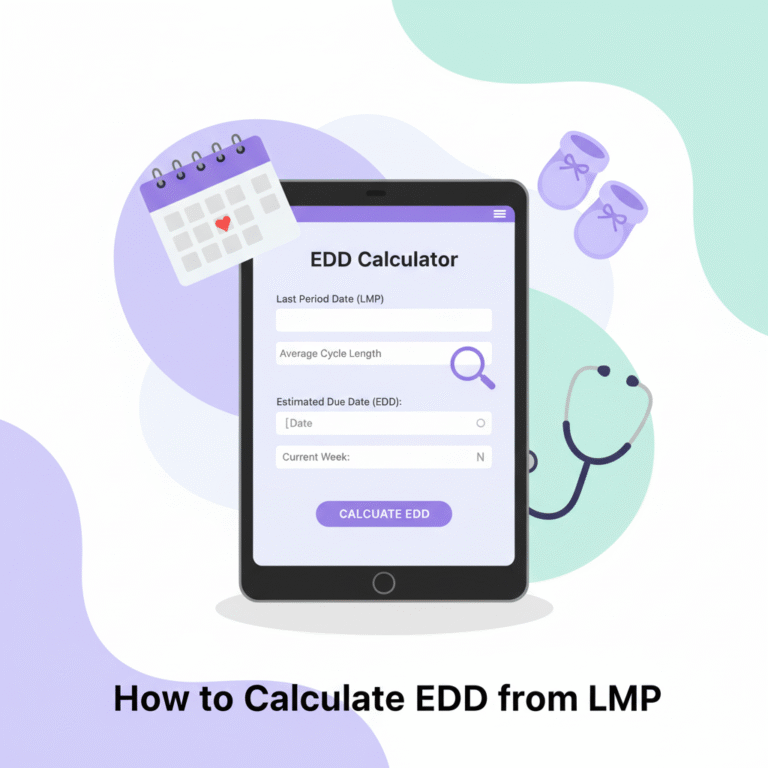
- Pregnancy tracking apps often include built-in calculators that use LMP, cycle length, or ultrasound dates to estimate EDD.
- Integration between community registries and clinic systems helps reconcile EDDs recorded by different providers.
However, data privacy and the accuracy of app-derived dates remain considerations. When using tech, it’s vital to maintain clinical oversight on methods for how to calculate EDD in pregnancy.
Counseling patients: communicating uncertainty and flexibility
Patients benefit when clinicians clearly explain how an EDD was calculated and what it means:
- Frame EDD as an estimate, not an exact deadline.
- Explain the method used (LMP, ultrasound, IVF) and why it was chosen.
- Discuss ranges of normal—term pregnancy spans from 37+0 to 41+6 weeks—and what triggers additional monitoring or intervention.
- Prepare families for variability (e.g., early labor is common; many births occur before or after EDD).
Good counseling about how to calculate EDD in pregnancy reduces anxiety and sets realistic expectations.
Legal and administrative uses of EDD
EDD appears on prenatal records, birth planning documents, and sometimes eligibility paperwork for services. It’s important that any recorded EDD follow accepted clinical reconciliation procedures so that administrative actions (e.g., maternity leave start dates) are based on consistent, defensible calculations. Understanding how to calculate EDD in pregnancy accurately mitigates administrative disputes and supports equitable access to benefits.
Cross-country and cultural variations
Different countries and regions have varying norms and health-system capacities:
- High-resource settings: routine early ultrasound is common, making ultrasound-based EDD standard.
- Low-resource settings: reliance on LMP is more frequent; community health workers often record dates in maternal registers.
- Cultural considerations may cause delayed disclosure of pregnancy, affecting early EDD calculation.
Global programs that standardize training on how to calculate EDD in pregnancy and invest in early-access diagnostics can reduce disparities.
Policy frameworks and maternal-health initiatives
Policies that incentivize early antenatal booking and access to early ultrasound directly influence the accuracy of EDD calculation. State-wise benefits—such as cash transfers or nutrition supplements—often hinge on documented gestational age or EDD. Therefore, policymakers who aim to improve maternal-child outcomes should consider investments that support reliable methods for how to calculate EDD in pregnancy, including training, equipment allocation, and data systems.
Ethical considerations
When communicating EDD and related risks, providers must remain sensitive to patient autonomy and cultural norms. Overemphasis on a single date can cause undue stress or lead to premature clinical decisions. Ethical practice involves transparent communication of uncertainty and shared decision-making about timing of interventions informed by accurate EDD calculations.
Training and capacity building
Improving how health systems calculate EDD requires training:
- Providers need instruction in LMP reconciliation, Naegele’s Rule, and ultrasound measurement techniques.
- Community health workers benefit from guidelines on collecting menstrual and pregnancy history.
- Health systems should audit EDD recording practices to ensure consistency.
Capacity-building ensures that how to calculate EDD in pregnancy is executed uniformly and with quality.
Monitoring, evaluation, and quality improvement
Quality-improvement cycles can improve EDD accuracy:
- Audit discrepancies between LMP and ultrasound EDDs to identify systemic sources of error.
- Monitor access to first-trimester ultrasound and time-to-first-antenatal-visit metrics.
- Evaluate outcomes like preterm birth detection and induction rates in relation to dating precision.
These measures close the loop between knowing how to calculate EDD in pregnancy and using that knowledge to enhance maternal-neonatal health.
Cost-effectiveness and resource allocation
Investments that increase access to first-trimester ultrasound can be cost-effective when they reduce complications through timely interventions. Policymakers must weigh capital and training costs against downstream savings from fewer preterm complications, optimized delivery planning, and better-targeted antenatal care. Cost-effectiveness analyses should include how improved EDD calculation affects program outcomes.
Future directions: biomarkers, machine learning, and precision dating
Emerging research explores additional ways to refine EDD:
- Biomarkers and biochemical dating tools could augment or refine gestational age estimates.
- Machine-learning models may integrate multiple data points—LMP, ultrasound metrics, maternal characteristics—to produce individualized EDD probabilities.
- Point-of-care ultrasound devices and telehealth expand access to early dating.
As new technologies arise, the core question of how to calculate EDD in pregnancy will evolve from single-method rules to integrated, data-driven models.
Recommendations for clinicians and policymakers
- Prioritize first-trimester ultrasound when possible to improve accuracy.
- Use Naegele’s Rule as an initial estimate when LMP is reliable.
- Reconcile LMP and ultrasound dates using national guideline thresholds.
- Document the method used and any changes to the EDD.
- Invest in training, equipment, and data systems that support consistent dating practices.
- Incorporate EDD-based planning into state-level maternal health initiatives and benefit programs.
These steps strengthen both patient care and system-level performance around how to calculate EDD in pregnancy.
Practical tips for expectant parents
- Record your LMP and menstrual-cycle length as early as possible.
- Seek first-trimester prenatal care and ultrasound when available.
- Ask your provider which method was used to calculate your EDD and why.
- Plan for a birth window rather than one fixed date—most births occur within a range around the EDD.
- Keep a copy of prenatal records that show your documented EDD for administrative and planning needs.
These patient-centered tips demystify how to calculate EDD in pregnancy and support shared decision-making.
Case study: implementing improved dating in a regional maternal program
A state public-health department implemented a program to promote earlier antenatal booking and subsidize first-trimester ultrasound for low-income women. Over 18 months:
- Early antenatal visits (before 12 weeks) increased by 40%.
- The proportion of pregnancies with ultrasound-confirmed EDD rose sharply.
- Inductions for “post-term” pregnancy dropped, and neonatal admissions for prematurity-related complications were identified earlier, allowing better preparedness.
This practical example shows how training and access to early dating tools can change outcomes when stakeholders prioritize how to calculate EDD in pregnancy.
Challenges and solutions summary
Challenges:
- Limited ultrasound access.
- Inconsistent LMP reporting.
- Variability in provider training.
- Administrative misuses of EDD.
Solutions:
- Strengthen early-care access and ultrasound availability.
- Standardize documentation and reconciliation protocols.
- Invest in training and audits.
- Use EDD responsibly in administrative contexts.
Addressing these helps systems derive maximal value from precise knowledge of how to calculate EDD in pregnancy.
Comparing global guidelines
Many professional bodies align around using early ultrasound as the gold standard for dating when available, with LMP used as a backup or complementary source. National guidelines outline thresholds for when ultrasound should override LMP (for example, >7 days discrepancy in the first trimester). Those seeking to understand how to calculate EDD in pregnancy should refer to local obstetric guidelines to ensure practice aligns with national standards.
The role of community health workers
Community health workers are often the first point of contact and play a key role in recording LMP, encouraging early antenatal visits, and helping families understand the EDD. Training them to collect accurate menstrual histories and refer for early ultrasound increases the overall accuracy of dating in the population and improves maternal outcomes.
Future prospects: equitable access and personalized dating
Moving forward, the goal is equitable access to accurate dating for all pregnant people, regardless of geography or socioeconomic status. Personalized models that blend clinical history, ultrasound, and population data will refine EDD predictions and support better-tailored care pathways. Continued investment and research are necessary to ensure that advances in how to calculate EDD in pregnancy benefit everyone.
Conclusion
Knowing how to calculate EDD in pregnancy is a foundational skill with clinical, administrative, and public-health importance. While simple rules like Naegele’s provide quick estimates, early ultrasound offers the most accurate dating. Combining methods thoughtfully—documenting choices, communicating uncertainty, and aligning with policy frameworks—ensures the EDD serves patients, providers, and systems well. Investments in training, access, and data systems will make EDD calculations more precise and equitable, improving maternal and neonatal outcomes at both the individual and population levels.
Frequently Asked Questions
What is the simplest way to calculate an estimated due date?
The simplest method is Naegele’s Rule, which uses the first day of the last menstrual period (LMP): add one year, subtract three months, and add seven days. This method is quick and useful when cycles are regular, but it assumes a 28-day cycle and ovulation at day 14.
Should I trust my LMP-based EDD or my ultrasound-based EDD?
If a first-trimester ultrasound is available, most guidelines recommend trusting ultrasound dating when it differs from LMP by more than a guideline threshold (commonly about 7 days in the first trimester). Early ultrasound typically provides greater accuracy.
How do assisted reproductive technologies affect EDD calculation?
For IVF and embryo transfer pregnancies, EDD is best calculated from the known date of fertilization or embryo transfer, which is more precise than LMP or ultrasound alone.
What if I don’t remember my LMP?
When the LMP is unknown or unreliable, an early ultrasound is the preferred way to establish an accurate EDD. If ultrasound is not accessible, clinicians may rely on later biometric measures, recognizing increased uncertainty.
How accurate is the EDD?
Accuracy varies by method and timing: first-trimester ultrasound is generally accurate within about ±5–7 days, LMP-based dating depends on cycle regularity and recall, and second-trimester biometric dating has wider margins of error.
How is EDD used in public-health programs and state benefits?
EDD helps schedule prenatal services, target gestational-window interventions, and determine eligibility for timing-based benefits. Accurate dating supports effective program planning and resource allocation.
Can technology improve how EDD is calculated?
Yes—electronic medical records, pregnancy apps, tele-ultrasound, and emerging machine-learning models can integrate data for more precise, accessible EDD calculation. However, clinical oversight and data privacy are vital.