
EDD Calculator by USG
Calculate your Estimated Due Date based on Ultrasound measurements
This is an estimate – always consult your healthcare provider for accurate dating.
Estimating the Estimated Date of Delivery (EDD) is a foundational step in obstetric care. In many parts of the world, clinicians and expectant parents rely on an EDD calculator by USG — that is, using ultrasonography (USG) measurements to calculate the expected date of delivery — because ultrasound dating often provides greater accuracy than recall-based methods. This article explains the origins and science of ultrasound-based EDD estimation, compares it with other dating methods, examines implementation and policy implications, looks at state-level and regional outcomes, highlights success stories and challenges, and offers forward-looking recommendations for improving maternal-fetal care using EDD calculators by USG.
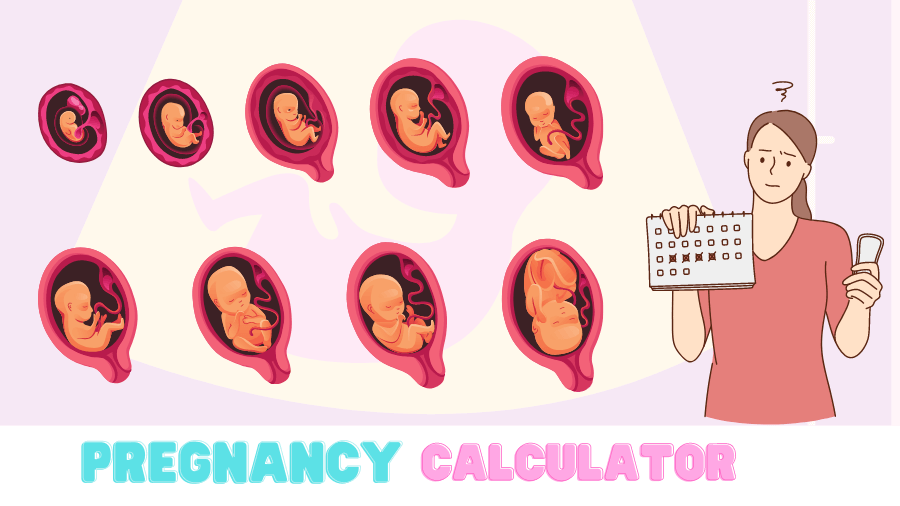
Why accurate dating matters
Accurate determination of an expected date of delivery shapes almost every aspect of antenatal and perinatal care. EDD affects timing of screenings and diagnostics, decisions about induction or surveillance for post-term pregnancy, classification of preterm births for epidemiology, resource planning in hospitals, and counseling for parents. Historically, the first-day-of-last-menstrual-period (LMP) method dominated dating, but LMP depends on correct recall and regular cycles. The EDD calculator by USG provides an objective, measurement-based method that reduces some of the uncertainty inherent in LMP-derived dating. Clinical guidance from major bodies recommends standardizing dating methods and redating when reliable ultrasound measurements contradict LMP in early pregnancy. ACOG
A short history: from menstrual calendars to ultrasound dating
For centuries, clinicians used simple arithmetic — adding 280 days to the LMP — to estimate delivery. Pregnancy wheels and clinical charts made this an accessible tool. The introduction and widespread adoption of obstetric ultrasound (USG) from the 1970s onward revolutionized obstetric dating. Initially, sonographers used crown–rump length (CRL) and other fetal biometric parameters to estimate gestational age, enabling more precise EDDs, especially when early first-trimester scans were available. Over time, standardized nomograms and calculators (what clinicians and patients refer to as an EDD calculator by USG) were developed and integrated into practice and electronic health records. Today, the ultrasound-based approach is often the preferred standard for dating when reliable early scans are available. Perinatology+1
How the EDD calculator by USG works: science and measurements
Ultrasound dating relies on biometric measurements that correlate with fetal age. The primary steps are:
- Early first-trimester: Crown–rump length (CRL) is measured. CRL-based dating in the first trimester is widely accepted as the most accurate ultrasound method for estimating gestational age and EDD because variability in fetal size is minimal at this stage.
- Second trimester: When first-trimester ultrasound is not available, second-trimester biometric parameters—biparietal diameter (BPD), head circumference (HC), abdominal circumference (AC), and femur length (FL)—are used with validated charts to estimate gestational age and infer EDD.
- Calculators and algorithms: The EDD calculator by USG applies established formulas or gestational age charts to the measured biometric values and the date of the ultrasound to compute a corresponding EDD or gestational age on the date of scanning. These calculators may use Robinson’s formula, Hadlock curves, or other validated regression models depending on the biometric chosen and the gestational window. Perinatology+1
Important clinical principle: when ultrasound-derived gestational age differs from LMP-derived age beyond a predefined threshold (often a week or more depending on gestational age), re-dating is recommended, with first-trimester ultrasound usually taking precedence. This standardization reduces misclassification of preterm or post-term births and improves timing for critical interventions. ACOG
Objectives of using an EDD calculator by USG
Implementing ultrasound-based EDD calculators serves multiple clinical, public health, and policy objectives:
- Clinical accuracy: reduce errors in gestational age estimation that can affect timing of prenatal tests, management of complications, and decisions about induction or delivery.
- Population health metrics: improve the accuracy of prematurity and perinatal statistics used to benchmark health systems.
- Resource planning: allow hospitals and health systems to predict caseloads, allocate neonatal intensive care resources, and plan workforce needs.
- Patient-centered care: provide clearer counseling for parents about milestones, risks, and expected timelines.
- Equity and standardization: provide a reproducible tool across different settings and practitioners to reduce variation in practice. Nature+1
Implementation: algorithms, tools, and clinical workflows
An effective EDD calculator by USG is not only the algorithm but the workflow that surrounds it.
- Standardized ultrasound protocols: sonographers must follow consistent measurement techniques (e.g., accepted CRL positioning) to ensure reproducibility.
- Choice of chart or algorithm: institutions select validated growth curves or formulas appropriate to the local population and gestational window. For example, Robinson’s CRL chart is common in the first trimester; Hadlock equations are frequently used in later windows.
- Electronic integration: many hospitals integrate EDD calculators into electronic medical records (EMR) so that biometric inputs auto-populate gestational-age fields, reducing transcription errors.
- Redating rules: clinical policies define thresholds for when ultrasound dating supersedes LMP-based dating, and how clinicians should document and communicate re-dating to patients.
- Training and quality assurance: consistent training for sonographers and periodic inter-operator calibration sessions help maintain accuracy and minimize measurement drift.
Because EDD calculators by USG are embedded in clinical workflows, implementation requires cooperation among obstetricians, sonographers, IT specialists, and health administrators. Perinatology+1
Accuracy, limitations, and comparisons: USG vs LMP and other methods
Ultrasound dating offers advantages but also has limitations. Understanding these trade-offs is vital.
Accuracy advantages
- Early first-trimester ultrasound (CRL) is widely regarded as the most accurate method for dating pregnancy when performed correctly; it reduces population-level misclassification of preterm and post-term births. Nature
Limitations and sources of error
- Timing of the scan: Accuracy declines as pregnancy advances. First-trimester CRL dating is more reliable than second- or third-trimester biometric dating because fetal growth variability increases later.
- Operator technique and equipment: Inter-operator variability and differences in ultrasound machines or measurement conventions can introduce errors.
- Population-specific differences: Some dating curves were developed on specific populations and may not transfer perfectly to all ethnic or regional groups without validation.
- Biological variability: Abnormal fetal growth (growth restriction or macrosomia) can distort dating when relying on later biometric measures.
Comparison with LMP-based calculations
- LMP can be inaccurate due to poor recall, irregular cycles, recent hormonal contraception, or bleeding in early pregnancy. Several studies demonstrate that first-trimester ultrasound dating reduces discrepancies and produces more reliable EDDs compared to LMP alone. However, LMP remains useful, especially when early ultrasound is unavailable. PMC+1
Hybrid approaches
- Many guidelines recommend combining LMP information with ultrasound findings, using redating rules to determine which should be the official EDD in the chart. This blended approach leverages the strengths of both methods. ACOG
State-level and regional impacts: how EDD calculators by USG shape maternal care
State and regional health systems experience tangible effects when ultrasound dating is systematically adopted:
Improved epidemiological data
When a state’s maternity services standardize on the EDD calculator by USG, statistics on preterm birth, low birth weight, and perinatal mortality become more accurate. This allows more targeted public health interventions and better monitoring of progress against maternal-child health goals.
Resource optimization
Accurate EDDs reduce unnecessary early-term inductions and better predict neonatal intensive care demand. States can allocate budgets and staff more precisely when due-date estimates are reliable across facilities.
Equity across urban-rural divides
Regions with robust ultrasound access—typically urban centers—gain the benefits of accurate dating more readily than rural or resource-poor areas. State-level programs that expand ultrasound access and train technicians can reduce disparities. Public health planners must factor in access gaps when interpreting state-level outcomes.
Policy levers
State health departments can encourage adoption by including ultrasound dating standards in maternal health policies, quality metrics, and reimbursement criteria. This incentivizes hospitals and clinics to adopt validated EDD calculator by USG workflows.
These impacts are not theoretical; jurisdictions that have standardized dating show reduced misclassification of preterm/post-term births and better-aligned perinatal care pathways. Nature
Success stories: where ultrasound-based EDD calculators made a difference
Several programs and facilities provide instructive examples of positive outcomes:
- Hospital systems with early-scan protocols: Centers that prioritize first-trimester CRL scans and embed the EDD calculator by USG in EMRs report more consistent dating, fewer late-term inductions motivated solely by LMP uncertainty, and clarified timing for prenatal testing.
- Regional telemedicine and portable USG deployment: In areas with limited access, initiatives that deploy portable ultrasound units and train midwives to capture CRL measurements, supplemented by remote sonographer review, have improved dating accuracy and antenatal care coordination.
- Public health surveillance improvements: Regions that shifted to ultrasound-standardized dating for registry data saw improvements in the quality of perinatal statistics, enabling better resource allocation and targeted interventions for preterm birth prevention.
These successes underscore that the EDD calculator by USG is not just a calculator—it's a catalyst for systemic improvements when coupled with training, access, and policy support. Perinatology+1
Challenges and barriers to adopting EDD calculators by USG
Widespread adoption faces obstacles:
Access and infrastructure
Many rural and low-resource settings lack reliable ultrasound machines or trained personnel. Without access, LMP remains the only practical method.
Cost and reimbursement
Ultrasound services, machine maintenance, and training have costs. If reimbursement policies do not support early dating scans, uptake may be slow.
Skills and quality control
Operator training and standardization are essential. Poor measurement technique undermines the utility of any EDD calculator by USG.
Data integration and documentation
EMR integration requires technical expertise. Miscommunication about re-dating policies can create inconsistencies in medical records and between providers.
Cultural and patient barriers
Some patients may present late to antenatal care, beyond the ideal dating window, or may have concerns about ultrasound use. Outreach and education are necessary to encourage early engagement.
Addressing these challenges requires coordinated policy, financing, and capacity-building efforts at regional and national levels.
Comparisons with other national or international practices
Different countries and health systems emphasize different approaches:
- Guideline-driven redating (e.g., ACOG and many western health systems): Clinical bodies often recommend formal redating rules where first-trimester ultrasound takes precedence within defined difference thresholds. This approach emphasizes standardization and research-grade accuracy. ACOG
- Resource-adapted models (low- and middle-income countries): Where early scans are scarce, hybrid models use LMP supported by targeted ultrasound when available, and incorporate community health workers and portable devices to extend coverage.
- Technology-enabled models: Some systems integrate automated EDD calculators within EMRs or mobile apps, using input biometric measurements from portable devices to provide immediate dating outputs, improving speed and reducing transcription errors. Calculator.net+1
When comparing models, the key variables are access, cost, accuracy, and how dating decisions affect clinical pathways. Systems that deliberately select and validate algorithms for their population, and that invest in early-scan access, achieve the most clinical benefit.
The role of EDD calculators by USG in broader maternal health policy
Beyond individual clinical encounters, ultrasound-based dating tools influence wider policy areas:
Maternal and child health programs
Accurate EDDs support timing for antenatal interventions (e.g., blood tests, vaccinations), optimize perinatal resource allocation, and refine the targeting of maternal health initiatives.
Data-driven policymaking
Reliable dating strengthens public health surveillance, enabling policymakers to track preterm birth trends, evaluate interventions, and make evidence-based decisions.
Legal and administrative implications
EDD is often used in administrative contexts (maternity leave timing, benefits eligibility). Standardizing on ultrasound-based dating reduces disputes and harmonizes eligibility criteria.
Equity and universal health coverage (UHC)
Inclusion of early ultrasound dating in publicly financed maternal services can be framed as part of UHC priorities, promoting both quality of care and fairness across regions.
Investing in the EDD calculator by USG—both as a tool and as system-level practice—can therefore be seen as part of a comprehensive maternal health policy strategy.
Integrating EDD calculators by USG with women empowerment and social schemes
Reliable EDDs intersect with social policy in meaningful ways:
- Maternity benefits and leave: Accurate delivery timing helps women better plan leave and return-to-work, supporting workforce participation and financial stability.
- Targeted social support: Programs that link pregnant women to nutritional support, conditional cash transfers, or counseling can use EDDs to sequence benefits and interventions more effectively.
- Education and empowerment: Early ultrasound contact can serve as a gateway to health education, family-planning counseling, and linkages to social services—empowering women with information and support.
- Rural outreach: Portable ultrasound programs tied to community health worker networks can improve both clinical outcomes and access to social programs in rural areas.
Thus, an EDD calculator by USG can be an operational anchor for combined health and social policy interventions that promote maternal welfare and gender equity.
Practical guidance: implementing EDD calculators by USG at facility level
For health administrators and clinicians seeking to implement or refine ultrasound-based dating, practical steps include:
- Adopt validated protocols: Choose appropriate dating formulas and standardize measurement techniques (e.g., CRL for first-trimester scans).
- Define re-dating thresholds: Establish clear policies for when ultrasound dating supersedes LMP, and ensure clinicians document the rationale.
- Train and certify staff: Invest in sonographer skill development and maintain periodic inter-rater reliability assessments.
- Ensure equipment maintenance and quality: Regular calibration and purchase of suitable machines (portable vs. fixed) matched to service area needs.
- Integrate into EMR and workflows: Automate the calculator where possible and create clear documentation templates showing original LMP, ultrasound findings, and the final EDD.
- Monitor outcomes: Collect data on dating discrepancies, induction rates, and perinatal outcomes to evaluate impact and refine practice.
These steps help the EDD calculator by USG function as a robust, reproducible tool within the clinical pathway.
Ethical, legal, and communication considerations
When changing a patient’s EDD based on ultrasound, clinicians must communicate clearly. Ethical practice includes explaining the reason for re-dating, implications for scheduled testing and interventions, and acknowledging remaining uncertainty. Legal and administrative systems that rely on EDD (e.g., maternity benefits) must align with clinical standards to prevent confusion or unequal treatment.
Transparency, documentation, and patient-centered counseling are essential to avoid mistrust and ensure that EDD calculators by USG support, rather than complicate, care.
Research evidence and validation: what the studies say
A body of research supports the relative accuracy of early ultrasound dating over LMP, particularly in reducing misclassification of preterm and post-term births. Studies validating first-trimester CRL dating, population-specific comparisons, and analyses of EDD discrepancies demonstrate that ultrasound-based methods—when applied according to best practices—produce more consistent gestational age estimates. At the same time, research highlights the limitations when scans occur later in pregnancy, and the need for population-specific calibration of growth curves and algorithms. These findings underpin guideline recommendations and the adoption of EDD calculators by USG in clinical practice. Nature+1
Case comparisons: outcomes with and without ultrasound dating standardization
Comparative analyses show that facilities and regions that standardize early ultrasound dating see:
- Lower rates of apparent post-term pregnancies due to corrected EDDs.
- More accurate timing of antenatal tests (e.g., aneuploidy screening windows).
- Better-aligned resource trajectories for neonatal care.
Conversely, areas without standardized ultrasound dating may see higher variability in reported preterm rates and more ad hoc decisions about induction based on inconsistent EDDs. Policymakers should therefore view investment in early ultrasound dating as both a quality and data-improvement measure. aims.org.uk
Technology evolution: apps, portable devices, and AI in EDD calculation
Several technological trends are reshaping how ultrasound-based EDDs are derived:
- Integrated EMR calculators: Automated EDD calculators in electronic records reduce manual errors and speed documentation.
- Portable ultrasound and point-of-care devices: These devices expand access in remote areas and allow earlier dating scans closer to home.
- Artificial intelligence (AI) and automated measurement: Emerging AI tools can identify fetal structures and propose biometric measurements, potentially reducing operator variability and enabling rapid EDD estimation in resource-limited settings.
- Mobile health (mHealth): Apps that combine patient-reported LMP, ultrasound inputs, and appointment scheduling help create a seamless maternity care experience centered on a validated EDD calculator by USG.
While promising, these technologies require validation, attention to bias, and careful governance to ensure they improve, rather than undermine, clinical quality.
Cost-effectiveness and financing considerations
Cost analyses must consider equipment, training, maintenance, and the downstream costs or savings associated with more accurate dating (e.g., reduced unnecessary inductions, improved neonatal resource allocation). Many studies suggest that early investment in ultrasound infrastructure and training yields net benefits through improved outcomes and more efficient care. Governments and payers should examine reimbursement models that incentivize early, quality ultrasound dating embedded in broader maternal healthcare financing strategies.
Future prospects and policy recommendations
To maximize the benefits of EDD calculators by USG, health systems and policymakers should consider the following actions:
- Prioritize early access: Encourage first-trimester contact and prioritize CRL-based scans where feasible.
- Standardize redating rules: Adopt clear, evidence-based thresholds for when ultrasound supersedes LMP across public and private sectors.
- Invest in training and QA: Build national or state-level training programs for sonography and routine quality audits.
- Expand portable ultrasound programs: Deploy portable units and tele-sonography programs to bridge rural-urban divides.
- Integrate technology safely: Validate AI-assisted measurement tools and integrate calculators into EMRs while monitoring for biases and performance.
- Align social policies: Ensure maternity benefits and leave policies recognize validated dating methods to prevent inequities.
- Monitor outcomes: Use robust data systems to measure the impact on preterm birth classification, induction rates, and neonatal outcomes.
These measures will help ensure that the EDD calculator by USG translates into better care, more accurate data, and improved maternal-child health outcomes.
Challenges to watch and mitigation strategies
Even as we promote ultrasound-based dating, several issues merit attention:
- Over-reliance on later scans: Avoid false confidence in third-trimester biometric dating. Emphasize early scans for dating.
- Inequitable rollout: Guard against widening disparities by coupling technology deployment with outreach and training for rural clinics.
- Data misinterpretation: Public health leaders must understand how changing dating methods affect trend lines and interpret secular changes accordingly.
- Quality decline in low-volume settings: Use telemedicine and regular competency checks to support small facilities.
Proactive policy and program design can mitigate these risks.
Toward better maternal outcomes: the role of EDD calculators by USG in a systems approach
Improved dating is not an end in itself. When combined with strong antenatal care pathways, targeted interventions for high-risk pregnancies, and thoughtful social supports, ultrasound-based EDD tools can be a lever for systemic improvements. By integrating clinical quality, data integrity, and social policy, health systems can convert precise EDDs into better-timed care, reduced complications, and stronger family preparedness.
FAQs
Conclusion
The EDD calculator by USG represents a critical advancement in obstetric dating, offering measurement-based precision that improves clinical decision-making, public-health reporting, and patient counseling. Realizing its full benefits requires careful attention to timing (favoring first-trimester CRL scans), standardized redating rules, investment in equipment and training, EMR integration, and policies that close access gaps. When coupled with social supports and women-centered care models, ultrasound-based EDD calculators become more than tools—they become enablers of safer pregnancies, more accurate data, and better-prepared families. Moving forward, strategic investment in portable technologies, quality assurance, and equitable service delivery can ensure that the promise of the EDD calculator by USG is realized across regions and populations.
Key references and further reading (selected)
- ACOG Committee Opinion: Methods for Estimating the Due Date. ACOG
- Studies validating ultrasound dating vs LMP and consequences for classification of preterm and post-term births. Nature+1
- Online calculators and clinical tools for EDD via ultrasound (Perinatology and other validated calculators). Perinatology+1
If you’d like, I can:
- produce a clinic-ready one-page protocol to implement ultrasound EDD dating in your facility (workflow + redating thresholds + documentation template), or
- generate patient-facing handouts explaining what an EDD calculator by USG means and why it may replace an LMP-based date.